Best Time to Visit Islamabad – Month by Month Travel Guide
If you’re planning a trip to Pakistan’s capital, one of the most important questions to ask is: what is the best time to visit Islamabad? The city offers different experiences throughout the year, thanks to its unique climate and location at the foothills of the Margalla Hills.
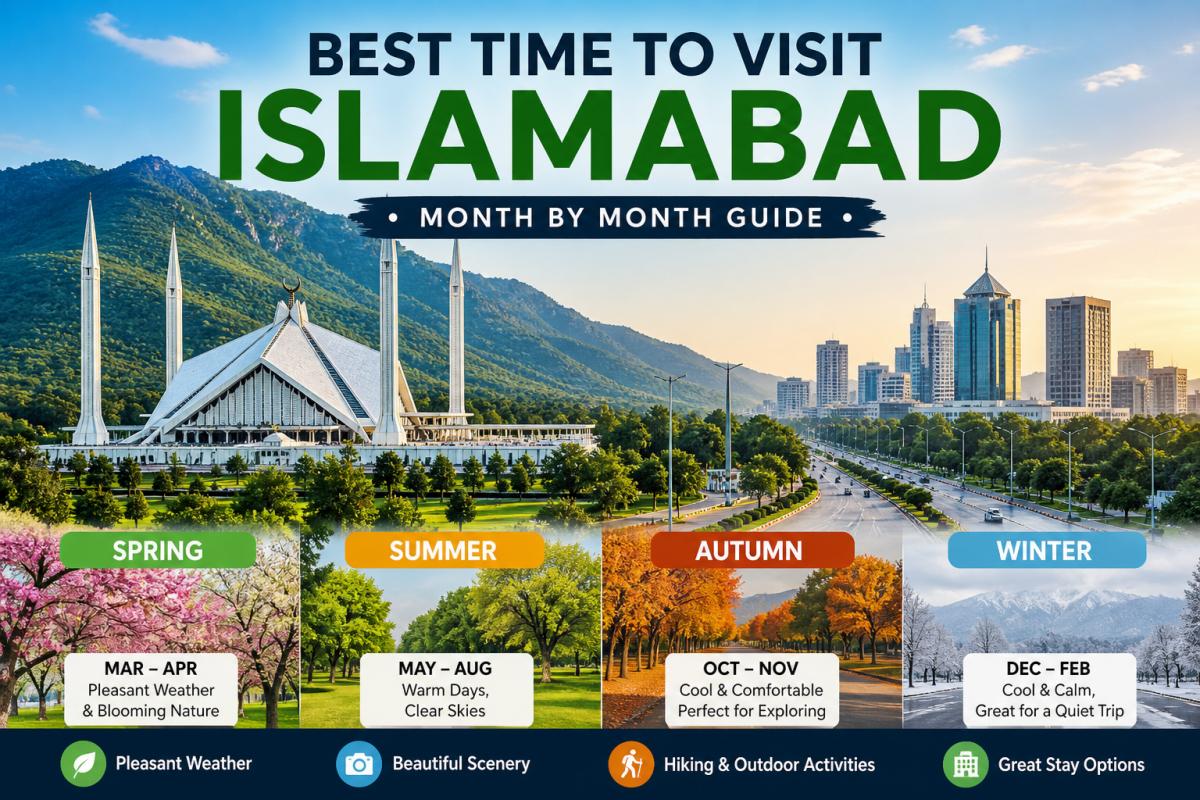
The best time to visit Islamabad is during spring (March to April) and autumn (October to November), when the weather is mild, the skies are clear, and outdoor activities are most enjoyable. However, each season has its own charm depending on your travel goals.
In this complete guide, you’ll discover the best months to visit Islamabad, what to expect from each season, and how to plan your trip accordingly.
Why Timing Matters When Visiting Islamabad
Islamabad is known for its greenery, clean air, and scenic surroundings. But the experience of the city can change significantly depending on the season. Summers can be hot, winters can be cool and foggy, while spring and autumn offer ideal conditions for sightseeing and exploring.
Choosing the right time to visit will help you enjoy the city’s top attractions, outdoor activities, and cultural experiences more comfortably. You can explore the most popular places in our guide to Top Attractions in Islamabad.
Best Time to Visit Islamabad Overall
For most travelers, the best time to visit Islamabad is:
- March to April (Spring) – Pleasant temperatures, blooming flowers, and fresh greenery
- October to November (Autumn) – Comfortable weather, clear skies, and beautiful landscapes
These months provide the perfect balance of temperature, visibility, and outdoor comfort.
Islamabad Weather by Season
Spring (March – April)
Spring is widely considered the best season to visit Islamabad. Temperatures range between 15°C and 25°C, making it ideal for sightseeing, hiking, and exploring the city.
The Margalla Hills turn green, flowers bloom across the city, and the air feels fresh and pleasant. This is also one of the best times for photography.
Summer (May – August)
Summer in Islamabad can be warm, with temperatures often reaching 35°C or higher. However, compared to other Pakistani cities, Islamabad remains relatively cooler due to its elevation.
This season is suitable for travelers who don’t mind the heat and want to avoid crowds. Early mornings and evenings are the best times for outdoor activities.
Monsoon Season (July – September)
The monsoon brings occasional heavy rains, which can make the city look even greener but may also disrupt travel plans.
While the rain adds a fresh atmosphere, it’s important to be prepared for sudden weather changes.
Autumn (October – November)
Autumn is another best time to visit Islamabad. The weather is mild, humidity is low, and visibility is excellent.
This season is perfect for outdoor activities, hiking, and exploring viewpoints like Daman-e-Koh.
Winter (December – February)
Winter in Islamabad is cool, with temperatures ranging from 5°C to 15°C. Nights can be chilly, and fog may reduce visibility.
This season is ideal for travelers who prefer quieter experiences and lower hotel prices.
For detailed climate data, visit our guide to Climate in Islamabad.
Month-by-Month Breakdown
January – February
Cool weather with occasional fog. Best for budget travelers and quiet city exploration.
March – April
The best months overall. Ideal weather for sightseeing and outdoor activities.
May – June
Warm temperatures, fewer tourists. Best for early morning exploration.
July – August
Monsoon season with rainfall and greenery. Good for scenic views but less predictable.
September
Transition month with improving weather conditions.
October – November
Excellent weather, clear skies, and comfortable temperatures. Perfect for travel.
December
Cool and calm, ideal for a peaceful visit.
Best Time for Specific Activities
Best Time for Sightseeing
March, April, October, and November offer the most comfortable conditions for visiting landmarks and exploring the city.
Best Time for Hiking
Spring and autumn are perfect for hiking in the Margalla Hills, thanks to mild temperatures and clear trails.
Best Time for Budget Travel
Winter months (December to February) offer lower hotel prices and fewer crowds.
Best Time for Photography
Spring and monsoon season provide vibrant colors, lush greenery, and dramatic skies.
How Long Should You Stay in Islamabad?
Timing your trip is important, but so is deciding how long to stay. Most travelers spend two to three days exploring Islamabad.
To plan your itinerary, read our guide: How Many Days in Islamabad.
Where to Stay in Islamabad
Choosing the right accommodation is also key to enjoying your trip. Popular areas include F-6, F-7, and Blue Area.
Browse options in our guide to Hotels in Islamabad.
Getting Around the City
Islamabad is easy to navigate. Visitors can use ride-hailing apps or rent a car in Islamabad for convenience and flexibility.
Frequently Asked Questions
What is the best month to visit Islamabad?
March and April are considered the best months due to pleasant weather and blooming landscapes.
Is summer a good time to visit Islamabad?
It can be warm, but still manageable compared to other cities in Pakistan.
Does it rain a lot in Islamabad?
Rain is mostly concentrated during the monsoon season (July–September).
Is winter too cold for tourists?
No, winters are mild compared to many countries, but evenings can be chilly.
Final Thoughts
The best time to visit Islamabad depends on your preferences, but spring and autumn offer the most comfortable and enjoyable conditions.
Whether you’re visiting for sightseeing, hiking, or relaxation, choosing the right season will enhance your experience and allow you to fully enjoy Pakistan’s beautiful capital.
Start planning your trip by checking Flights to Islamabad and booking your stay through Hotels in Islamabad.